




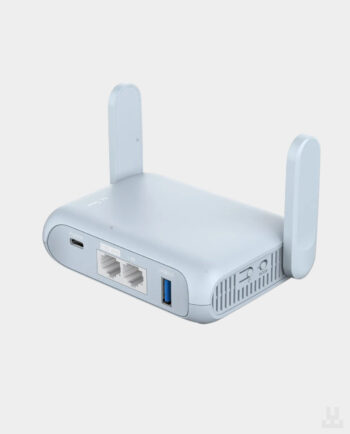
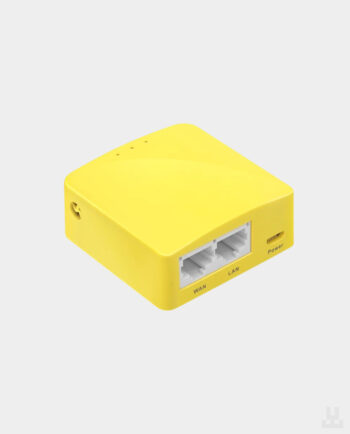
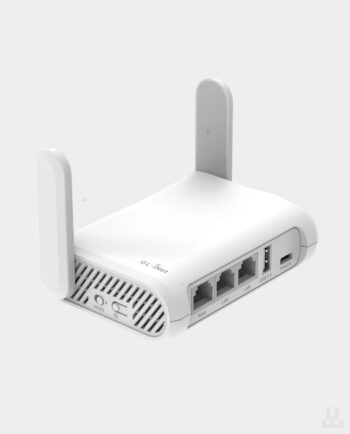
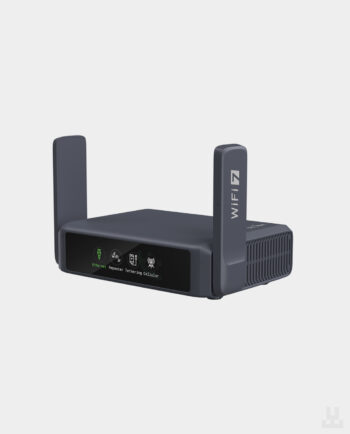
A private router is a compact network device for creating a separate secured network. Unlike regular home or office routers, these models are designed to work with VPN, Tor, secure DNS and other traffic protection tools. Many private routers run on the open-source OpenWrt firmware, which gives more flexibility in configuration and allows better control over how the device works.
By connecting a private router, you can create a separate network through which the traffic of your devices will pass — laptop, phone, tablet, smart devices or work equipment. It is a convenient way to set up protection once at the network level and avoid turning on VPN manually on each device separately.
The most common scenario is protecting your connection on third-party Wi-Fi networks. Wi-Fi in hotels, airports, cafés, coworking spaces and conferences is not always safe: the network may be configured incorrectly, DNS requests may be spoofed, and an attacker may create an access point that looks like the real one. A private router connects to the external network and routes the traffic of your devices through a preconfigured VPN. For the network owner and outside observers, it looks like a regular internet connection, but the content of the connection and real requests become much harder to analyze or intercept.
For those who work with cryptocurrency, a private router provides an additional layer of protection when logging in to exchanges, working with DeFi services, hardware wallets and work accounts. It helps reduce risks related to public networks, DNS spoofing and accidental connection to unsafe Wi-Fi. It does not replace a hardware wallet, security key or careful address verification, but it works well as part of an overall security setup.
At home, a private router can be used as a separate secured network for important devices. For example, you can connect a laptop for working with cryptocurrency, a work computer, a phone or devices for which you want to force VPN use. There is no need to install and configure VPN apps on each device separately — protection works at the router level.
A separate audience for private routers includes travelers, remote workers and people who often connect to different networks outside the home. Having your own router on a business trip or while traveling helps keep a familiar connection setup: one Wi-Fi network for your devices, a preconfigured VPN and less dependence on the quality and security of someone else’s network.
A VPN app protects only the device on which it is installed. If VPN is enabled only on your phone, your laptop, tablet and other devices remain without this protection. A private router protects the entire network at once, including devices where a VPN app cannot be installed or is inconvenient to use: smart TVs, IoT devices, game consoles and older tablets.
Another advantage is centralized configuration. A VPN app may disconnect after an update, network change or system failure. A private router works independently of the operating systems of the devices and allows you to manage the connection in one place. On some models, you can configure automatic VPN connection, traffic blocking if the VPN connection drops, and separate rules for different devices.
First, decide where and how you will use the router. For travel and work outside the home, compact models are suitable — they fit easily into a backpack and can be powered via USB-C or a regular adapter. For stationary use at home or in the office, it is better to look at more powerful models with more ports and support for more modern standards.
An important parameter is supported VPN protocols. WireGuard usually works faster and is well suited for everyday use. OpenVPN is more universal and is supported by most VPN services. It is also worth paying attention to ready-made profiles for popular VPN providers, secure DNS support, the ability to work through a mobile modem and the availability of Tor if you need it for specific tasks.
Additional parameters include power supply, number of ports, USB modem support, the ability to connect external storage, processor performance and firmware openness. Routers based on OpenWrt provide more options for fine-tuning and suit those who want deeper network control than a regular home router can offer.
The Lwallet catalog includes private routers with support for VPN, Tor, secure DNS and open-source OpenWrt firmware. There are compact models for travel and more powerful options for home or office use. If you are not sure which model is right for your needs, we will help you compare the options and choose a router for your use case.
We have a showroom in Lviv where you can see the models in person, compare form factors and ask a manager your questions. Self-pickup is available for Kyiv. We deliver across Ukraine and internationally.
You can place an order on the website, by phone or through a chat with a manager.